
To Love Is To Die | Antonio Rinaldi
To Love Is To Die: The Most Polarising Party of the Year
Antonio Rinaldi | Pip Theatre | Melt Festival
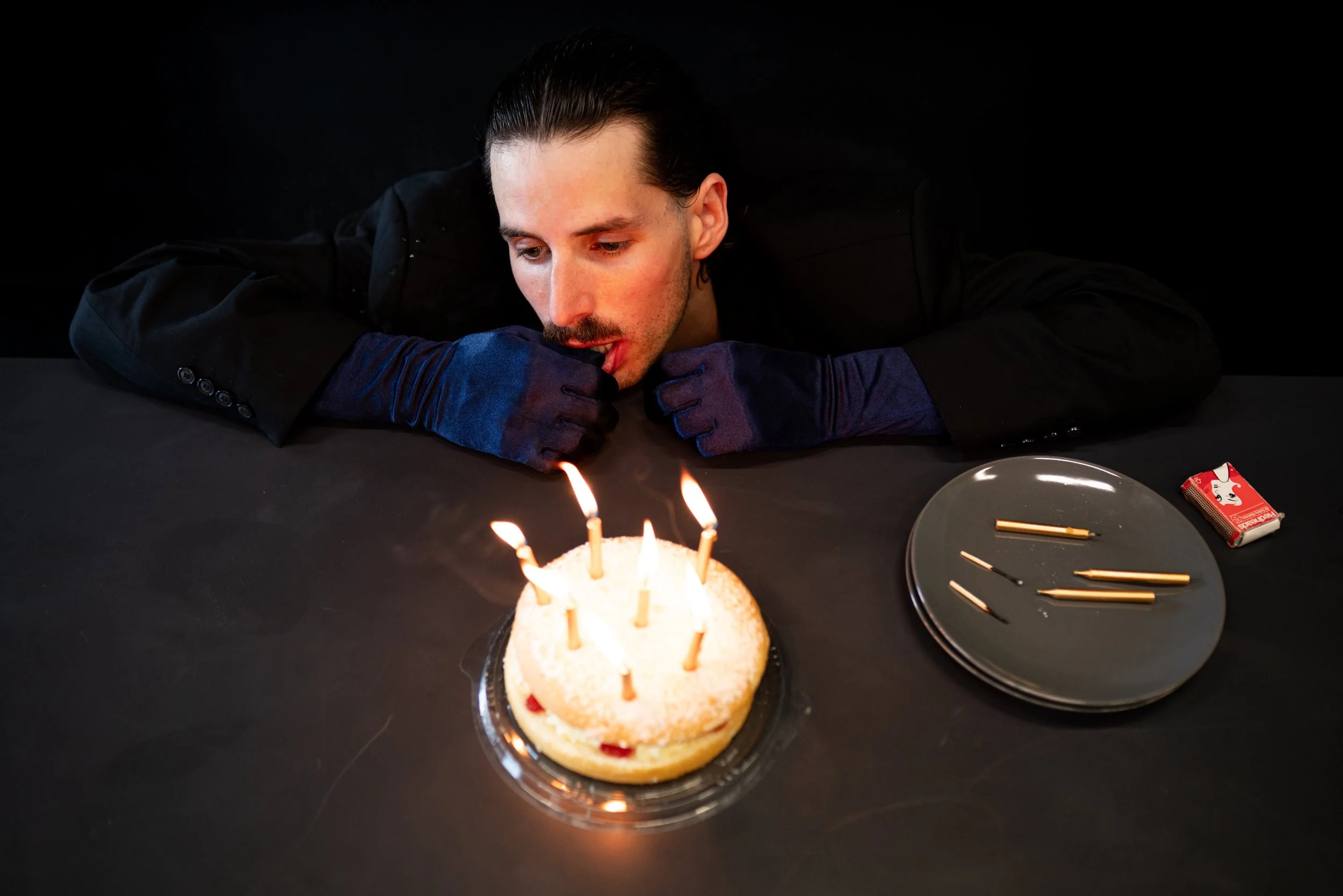
To Love Is To Die is a masterclass in crafting polarities: tender and brutal, playful and devastating, intimate and confronting.
The genius of this work lies in Rinaldi's careful cultivation of trust. From the moment the audience dons those party hats, no instruction needed, just an implicit invitation to participate, a contract is formed. We're all at this party together, and Rinaldi is our generous host.
The staging is floor-level, eliminating hierarchy between performer and witness. The set is deceptively simple: a dining table (that universal site of memory - birthdays, breakups, family dinners, sex, grief) and a party banner reading "she's only happy when she cries." Everything you need to know about the work's contradictions is already there.
Rinaldi begins slowly, drawing the audience in with micro-moments. He works his hands together with strength and intention, eventually working up his arm vein, pinching it with his thumb and index finger and he rises to standing.
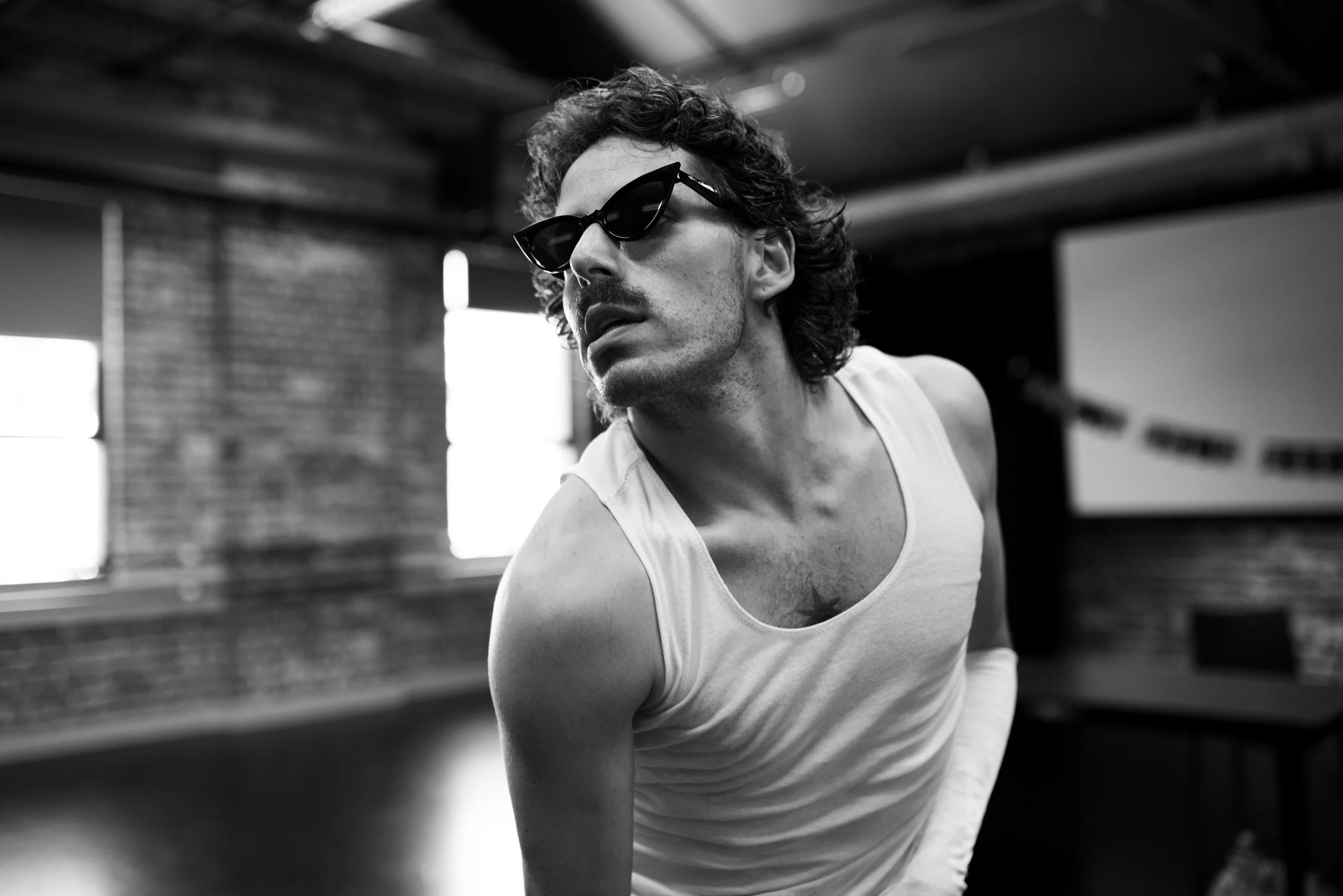
He lip-syncs to '70s hits, he dances with joy, he invites an audience member to join him in a slow, sensual embrace as confetti rains down. By this point, he has us completely. We trust him. Which is precisely when he strips himself bare and the work descends into its most confronting passage.
The music stops. Rinaldi's body begins to thrash, back and forth, back and forth, with such violent repetition it becomes almost unwatchable. Almost. But you can't look away. This is the calculated risk of trust: once you have it, you can take an audience to the edge and they will follow. The physical response is visceral, a tightening in the gut, a sickening (in the most powerful sense) recognition of pain and pleasure made visible. This isn't just impressive dancing; this is someone unraveling in front of you.
Then, just as skillfully, Rinaldi pulls back. He lights candles on a cake, invites another audience member to the table, and gestures for us to sing "Happy Birthday." We do. They blow out the candles, make a wish, and suddenly we remember why we're wearing these hats. The juxtaposition is breathtaking. The Birthday ritual, symbol of hope and renewal, placed directly after such darkness. This is what a balanced work truly looks like.
Rinaldi's performance encompasses dance, spoken word, lip sync, and physical theatre, all executed with raw honesty and technical prowess. But what's most impressive is his generosity as a performer, his willingness to be vulnerable, to live fully in each moment, to make the audience feel like they're watching someone alone in their room. The intimacy of Pip Theatre amplifies this effect.
The work drew a beautifully diverse audience in age and experience, each person walking away with something different but equally weighty. Watching people process the work in real-time with laughter, tears, and uncomfortable grimaces. It was testament to Rinaldi's skill in holding space for complexity.
If there's a curiosity for future development, it would be worth seeing how To Love Is To Die translates to a larger stage with greater distance between performer and audience. The intimacy of Pip Theatre heightened the theatrical impact but perhaps limited opportunities to fully showcase Rinaldi's dance virtuosity. A more traditional theatre setting with expanded lighting design could add another layer to the work's already rich narrative.
But these are questions for future iterations. As it stands, To Love Is To Die is a remarkable achievement, a work that earns your trust, breaks your heart, and reminds you why live performance matters. Rinaldi doesn't just perform; he offers himself completely, and in doing so, gives the audience permission to remember and feel everything.
Full disclosure: The author is the photographer and videographer for this production.
